Upcoming Events
Please also join our Weekly BioClub Meetings, every Tuesday Meeting at 19:00 at BioClub Tokyo!
Everyone is welcome!
And if you make a talk or presentation please do the following:
- Register on our BioClub Discord
- Introduce yourself in the #introduction channel and suggest an event in the #event channel
- Fill out this Google Form for Event Details so we can collect the event details and make event pages.
Bio-Sonicfication Study Group
Every 3rd Tuesday of the Month. Please join us if you are interested in Bio & Sound!
Indigo Study Group
Everty 1st Tuesday of the month! Please join if you are interested in Bio & Colors!

Thilina Heenatigala: The Search for Life Beyond Earth
How do we search for life beyond Earth, and how would we know if we had actually found it? The Search for Life Beyond Earth explores the science behind one of humanity’s oldest questions, beginning with a surprisingly difficult problem: what is life?
Recent Events
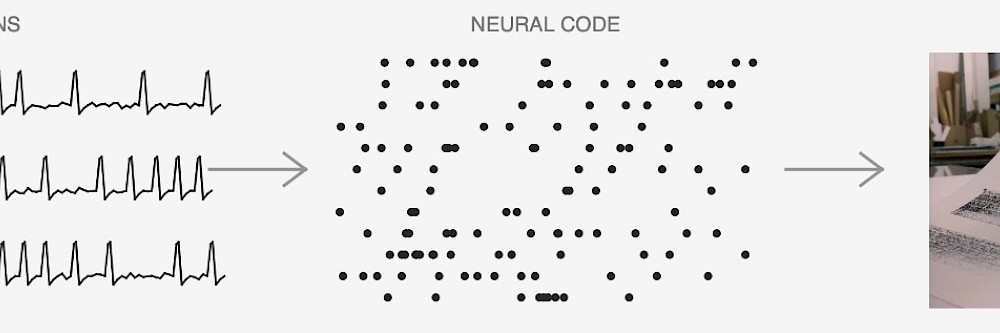
Mehdi Sicre: From Engram to Print: Recording the Brain, Pressing it onto Matter
Emotional Printing is an art-science project that captures brain electrical activity and prints it onto paper. The idea is simple: our brains constantly produce electrical patterns that carry our emotions, thoughts, and memories, but they remain invisible, locked inside the skull. What if we could pull them out and fix them onto a physical surface?

Maarten Smith: What do we mean by 'open'? Rethinking Open Science through Art and Design Practices
Drawing on his experience teaching and coordinating the BioHack Academy at Waag (Amsterdam) over the past three years, design researcher Maarten Smith will present reflections on how artists, designers and scientists might engage with biotechnology outside traditional academic or industrial settings and mutually transform each others practices.

Back into the Earth - An End of Life Party for our beloved Sukumo Vat
Our sukumo indigo vat, kept alive by members since Lau Kaker's 2024 residency, is ready to transition. The sukumo vat can no longer dye, but its nitrogen-rich environment is ready to feed the earth. Celebrate with us and Lau as the vat returns to the earth.

Cat Liu: With-Slowness: Natural Dyes and the Aesthetics of Care
Intra-action and more-than human perspectives suggest that entities are constituted by their relationships and entanglements "acting-with" other entities. This talk will discuss personal research on applying natural dye processes and material impermanence to fine art and social practice, exploring how technology can be used to physicalize and emphasize temporal entanglements. This work focuses on both the chemical processes that indicate these relationships and fragments of cultural knowledge that are imbedded in material and technology.
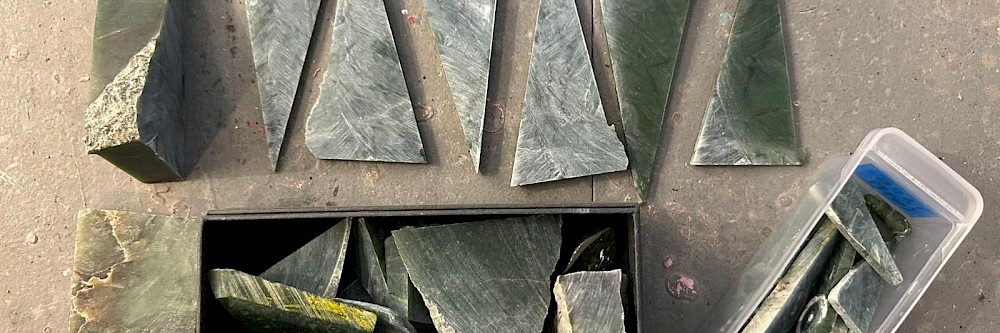
Ananda Gabo: Near-Future Heirlooms
Ananda's philosophy of bio-art and design is shaped by the idea of "near-future heirlooms". In this talk, Ananda will go over some of her latest explorations and hybrid fabrication methodologies through her lens of combining ancestral knowledge, contemporary technique, and slow making.

How to Grow (Almost) Anything 2026 @BioCLub
How to Grow (Almost) Anything - or HTGAA - is a long-running introduction course about Synthetic Biology, taught by the experts in the field. The course was initiated and is organized by David Kong from the MIT Community Biotechnology Initiative (CBI) and is run both at MIT and globally through an expanding network of global HTGAA nodes. BioClub Tokyo is proud to be a node again in 2026. If you are curious about Synthetic Biology and are willing to study hard, please come and join us! The course if free!

Spiral Club × BioClub — First Collaboration in a Year!
This event is part of our biotope observation activities in Shibuya. We have 4 biotopes which we have been taking care of since summer 2023. By enjoying observing the tiny creatures and having a dialogue session in collaboration with BioClub, we hope to give people a better understanding of the many living things we share our city with, and create an opportunity to think about how we can help make our society more sustainable for both people and nature.

Ryutaro Nishimura: BioCraft × BioClub: Distilling Lost Scents of Terra
Distill the Lost Fragrance of Earth (Terra) ~ A Laboratory Journey in 2225 Through “Memory and Mind Mechanisms” and “Science Fiction” ~ A 2.5-hour immersive experience redefining the world's “value” through your sense of smell and imagination.

Yuki Hanyu: A new collaborative sci-fi genre: ‘Fluffy Bio-Punk’
Among the myriad sci-fi worlds out there, solarpunk and light-hearted, fluffy biopunk seem to have a rather thin following...? Let's all collaborate to create setting materials, refine them to a level usable by creators, and pioneer a new genre!

BioClub 2025 Year End Party
忘年会 means literally 'forget-the-year party', but we will use our last weekly meeting of 2025 as a chance to remember and celebrate what happened in and around BioClub in 2025. Join us for a little party, feel free to bring snacks - and drinks!